
How to paint a room properly
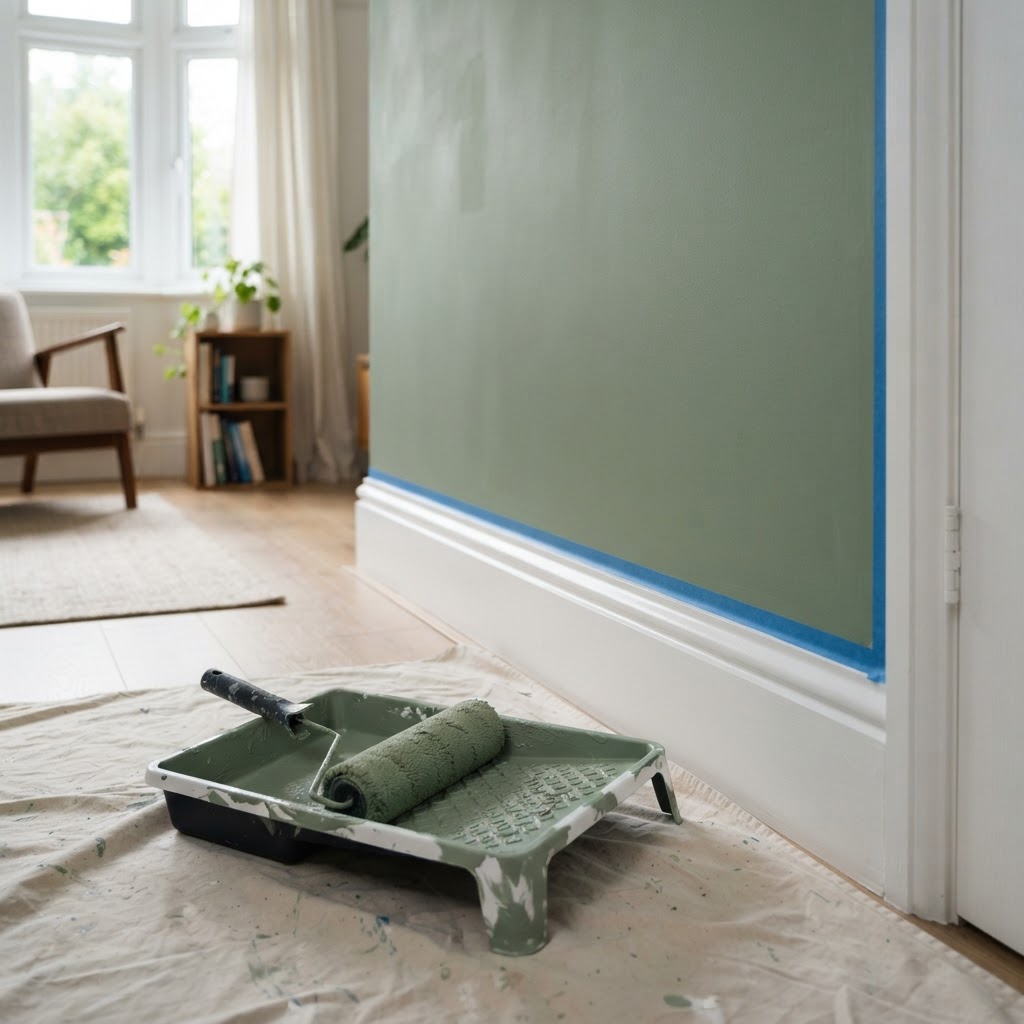
Painting is the cheapest way to change a room and the easiest job to make look amateur. The paint itself is rarely the problem: it is dust, glossy patches, uneven cutting in and too few coats. Work top to bottom, do the ceiling first, then the walls, then the woodwork, and let each coat dry properly rather than adding a second while the first is still tacky.
What you will need
- Dust sheets
- Filling knife and sanding block
- Decorator's caulk and a gun
- Masking tape
- Two or three quality brushes, including a 50mm cutting-in brush
- Roller and tray, medium pile
- Extension pole
- Step ladder
What to buy
- Sugar soap or a degreaser
- Fine surface filler
- Primer or undercoat for patches
- Ceiling paint
- Wall paint in the finish you want
- Woodwork undercoat and topcoat
- Dust sheets and a couple of old cloths
Step by step
Clear the room and protect it
Take out as much as you can and push the rest to the middle. Cover the floor with dust sheets, tape the sheets down, and tape round sockets, switches and any edge you want sharp. Remove light fittings, curtain poles and door handles rather than painting round them.
Wash and repair the walls
Wash the walls down with sugar soap to take off grease, especially in kitchens and hallways, then rinse. Fill cracks and old screw holes with fine surface filler, let it set, and sand flush. Any bare plaster or filled patch needs a thinned primer coat or it will soak up paint and show as a dull patch.
Cut in the edges first
Brush a 50 to 60mm band round the ceiling line, corners, sockets and skirting with a cutting-in brush, keeping the line straight and slightly thin. Work in sections you can reach comfortably, and keep the band wet so it blends with the roller. Caulk any gaps between skirting and wall before this stage, not after.
Roll the walls in a W pattern
Load the roller evenly, then roll a W across the wall and fill it in without pressing hard. Work in a metre-wide strip from top to bottom and keep a wet edge, so you are always rolling into paint that has not dried. Two thin coats always beat one thick one, which drips, sags and shows every ridge.
Finish the woodwork and tidy up
Sand the woodwork lightly, wipe off the dust, then undercoat and topcoat with a brush, working with the grain. Pull the masking tape off while the paint is still slightly soft rather than fully hard, so it does not tear the edge. Leave the room to dry with the window open a little, and put the fittings back only when the paint is properly set.
Where people go wrong
- Painting over dust and grease, so the paint flakes within a year
- Cutting in badly and hoping the roller will hide the line
- Adding a second coat before the first is dry
- Skipping primer on bare plaster and filled patches
- Leaving masking tape on for days, so it pulls the paint off when removed
Safety, and when to stop
Keep windows open while painting and while it dries, and never use solvent-based paints near a pilot flame, boiler or gas appliance. Keep paint, white spirit and brushes out of reach of children, and take old paint and thinners to the household recycling centre rather than pouring them down the drain. If the property was built before the mid-1980s, do not sand old paintwork without testing for lead.
Questions
Do I need to sand between coats?
A light rub with fine paper on woodwork is worth it, because it keys the surface and removes brush marks. Walls usually only need sanding where there is a run or a rough patch.
How many coats of paint do I need?
Two on walls over a similar colour, three if you are going from dark to light. Woodwork needs an undercoat plus one or two topcoats depending on the finish.
Should I paint the ceiling or the walls first?
Ceiling first, then walls, then woodwork. That way any drips land on something that is still to be painted.
Can I paint over wallpaper?
You can, but any loose seams or bubbles will show and the paper can lift. It is better to strip it, or at least to seal it with an oil-based primer first.
Rather not tackle it?
This is the sort of job Townsley Multi Services does every week around Wetherby and York. Send a photo and we will tell you what it needs.