
How to replace a ceiling light fitting
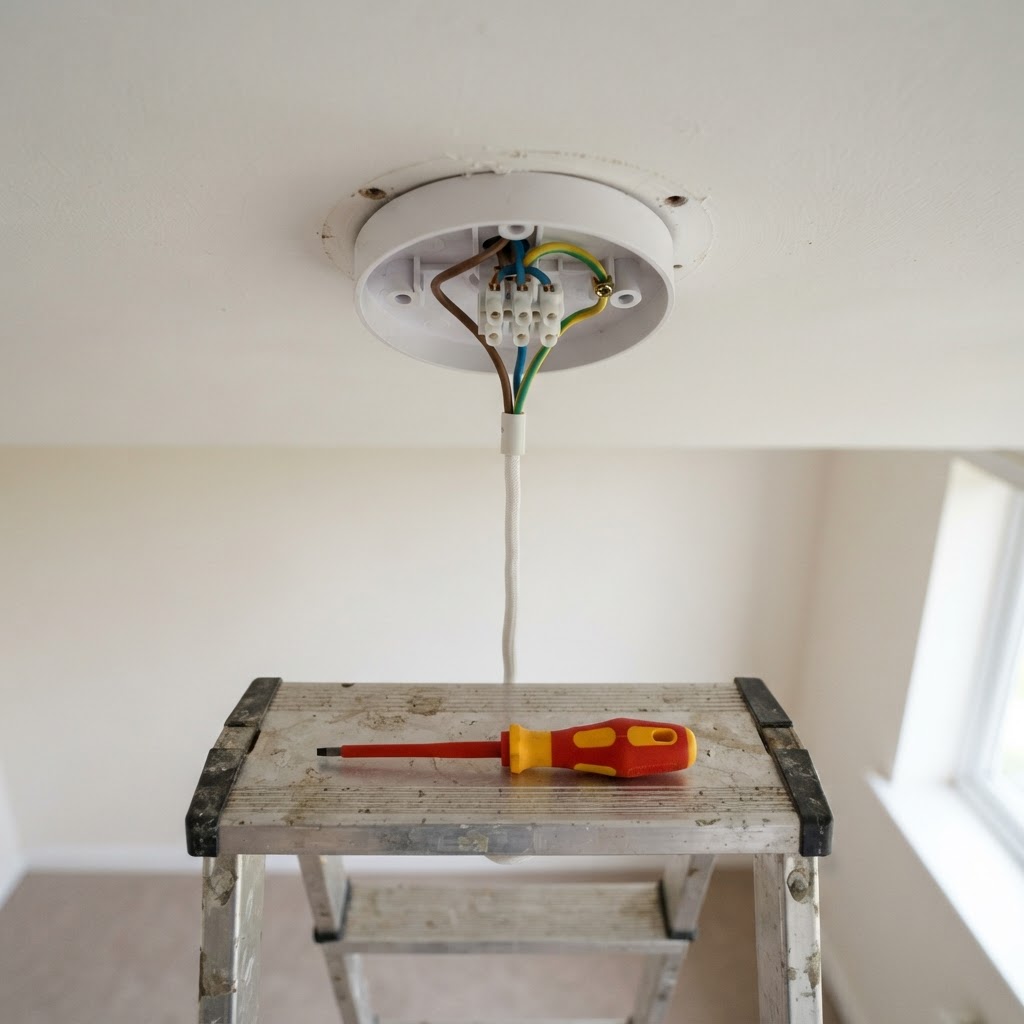
Changing a light fitting for a new one of the same type, on the same circuit, in the same position, is the one electrical job a competent DIYer can reasonably do. It is still electrical work, so the rules matter: isolate the circuit and prove it is dead, and if anything about the wiring is unfamiliar, stop. New circuits, extra fittings, outside lights and anything in a bathroom or kitchen within the special zones must be done and certified by a qualified electrician.
What you will need
- Voltage tester or proving unit
- Insulated screwdrivers
- Wire strippers
- Step ladder
- Small terminal block and a marker pen
- Torch
What to buy
- The new light fitting
- Suitable connector block or the fitting's own terminals
- Heat-resistant sleeving for the earth if needed
- A note of the old wiring, or your phone to photograph it
Step by step
Isolate the circuit and prove it dead
Turn off the lighting circuit at the consumer unit, not just the wall switch, and put a note on it so nobody turns it back on. Then test at the fitting with a voltage tester and prove the tester works on a known live source first. If you cannot prove it is dead, do not touch it.
Photograph the old wiring
Before disconnecting anything, take a photo of the terminals and note which wire goes where. A ceiling rose often has looped lives that are nothing to do with the light, and getting them mixed up leaves other rooms without power.
Disconnect and remove the old fitting
Unscrew the rose or fitting, disconnect the cores, and keep the loop terminals joined together in a separate connector block rather than leaving them loose. Support the fitting as you undo the last screws so it does not hang on the cables.
Connect the new fitting
Match the cores exactly as they were: brown or red to live, blue or black to neutral, green and yellow to earth. Use the correct terminal block, tighten each screw properly on the copper and not on the insulation, and make sure no bare copper is showing. Earth the metal body of any metal fitting.
Fix it, restore power and test
Screw the fitting to the ceiling using the existing fixing points, then restore the circuit and switch on. Check the light works, then check the other lights on the same circuit still work, which tells you the loop is still connected. If it flickers, trips or anything feels warm, switch it off and call an electrician.
Where people go wrong
- Turning off only the wall switch and leaving the loop live
- Not photographing the old wiring before disconnecting it
- Mixing up the looped lives, so other rooms lose their lights
- Tightening terminals onto the insulation instead of bare copper
- Fitting a metal light without earthing the body
Safety, and when to stop
Electricity kills, and the only safe working method is to isolate the circuit, lock or label it, and prove the fitting is dead with a tester. Never work on a light by just turning off the wall switch, because the loop stays live. Bathroom and kitchen lights, outside lights, extra fittings and any new cable are notifiable or restricted work and must be done by a qualified electrician. If the wiring colours or the number of cables do not match what you expected, put the cover back and get help.
Questions
Can I change a light fitting myself in the UK?
A like-for-like replacement on an existing circuit is generally allowed in England and Wales as non-notifiable work, provided you are competent and it is not in a special location such as a bathroom. New circuits and new fittings need a qualified electrician.
What are the three wires in a ceiling rose?
Live, neutral and earth for the light itself, plus looped live and neutral cores that feed the next light on the circuit. The loop must stay connected even when the fitting is removed.
Why do my other lights stop working?
The looped live has been disconnected or put in the wrong terminal. It has to stay joined, separately from the switched live.
Do I need an electrician for a bathroom light?
Yes. Bathrooms have defined zones and strict rules, and the work must be done and certified by a qualified electrician.
Rather not tackle it?
This is the sort of job Townsley Multi Services does every week around Wetherby and York. Send a photo and we will tell you what it needs.